We want to create the biggest online listing collection of Hunting cabins around the world!
Please add you short stay hunting cabin rentals now.
Finding a great cabin for your hunting trip can be very challenging. However, stop looking any further, as we collect the most beautfiul hunting cabins from aroudn the globe!
12 Hunting cabins found
North America
United States of America
Alaska
Georgia
Montana
Oregon
Texas
Wyoming
List your hunting cabin on this page?
Add linkHunting cabins and lodges: a practical guide to a base in wild country
A hunting cabin is built for one purpose: to get you close to the land. It sits at the edge of the forest, above a valley or on the shore of a remote lake, far from towns and busy roads. Hunters use it to be in position before first light and to rest, dry out and eat well after a long day outside. But the same qualities that make a cabin good for hunting also make it a wonderful retreat for anyone who wants silence, dark skies and wildlife right outside the window.
This page collects hunting cabins and lodges from around the world. The guide below explains the different types, the practical details that really matter in remote country, and how to prepare for a responsible and safe stay, whether you come with a rifle, a bow, a camera or just a good pair of boots.
A worldwide tradition
Hunting cabins exist wherever there is wild land and a culture of spending time in it. In North America, cabins and lodges are found across the forests, mountains and prairies of Canada and the United States, from the northern woods to the Rocky Mountains, and many remote camps are reached by boat, trail or floatplane. In Scandinavia, simple cabins in the forests and mountains of Sweden, Norway and Finland are part of a long tradition of moose and grouse hunting and of outdoor life in general. Central and Eastern Europe have a long history of hunting lodges in large forest areas, from the Alps to the Carpathian Mountains.
Further south, New Zealand is known for its backcountry huts and for hunting introduced species such as deer and tahr in rugged mountain terrain. Argentina attracts visitors for bird shooting and for big game in Patagonia and the central provinces. In southern Africa, countries such as South Africa and Namibia have hunting lodges on large private properties, where hunting is often linked to wildlife management on the land.
Types of hunting accommodation
- Self-catering cabins: you bring your own food and gear and organise your own days. Often simple, sometimes very comfortable.
- Guided or outfitted lodges: meals, guiding, transport in the field and sometimes game processing are arranged for you.
- Backcountry huts: basic shelters reached on foot, by horse or by boat, often with bunks, a stove and not much else.
- Estate lodges: larger houses on private land, suitable for groups, with a kitchen, a dining room and space to gather in the evening.
- Fly-in camps: remote cabins that can only be reached by small aircraft, where you are truly on your own for the length of your stay.
Rules, licences and responsible hunting
Hunting is regulated almost everywhere, and the rules vary greatly between countries, and often between states, provinces or regions within the same country. Depending on where you go, you may need a hunting licence, a permit or tag for specific species, proof of a hunter education course, or a local guide. Seasons, permitted species, bag limits, legal methods and hunting hours all differ. Taking a firearm across a border or on a flight involves its own set of rules and paperwork, which can take time to arrange. Always check the current regulations with the official authorities for the area where you plan to hunt, and ask your host what applies on their land. Never assume that what is allowed at home is allowed abroad.
Beyond the law, good hunting is about ethics. Fair chase means giving the animal a real chance and not taking unfair advantage. Take only shots you are confident of, know your limits and your equipment, and make every effort to recover wounded game. Many hunters see themselves as part of conservation: respecting quotas, supporting habitat protection and using as much of the animal as possible.
Safety in the field and at the cabin
- Wear blaze orange or other high-visibility clothing where it is required, and consider it where it is not, especially in areas where other people may be out.
- Store firearms unloaded and secured, with ammunition kept separately, following local storage rules.
- Always tell someone where you are going and when you expect to be back.
- Carry a map, a compass or GPS device, a first-aid kit and a way to call for help; in areas without phone signal, a satellite messenger can be valuable.
- Learn about dangerous wildlife in the area, such as bears in parts of North America and Scandinavia, and how to store food so it does not attract them.
The practical side of remote cabins
Access. Many cabins lie at the end of gravel or forest roads that can be rough, muddy or snowbound. Ask whether you need a four-wheel-drive vehicle, whether the road is maintained in all seasons, and how far the last stretch is on foot.
Power. Off-grid cabins often rely on a generator, solar panels or both. Find out whether power is available all day or only at certain hours, and whether you can charge batteries for torches, cameras and GPS units.
Water and heating. Some cabins have running water from a well or spring, while others need water to be carried in or filtered from a lake or stream. Heating is often a wood stove, so check whether firewood is supplied.
Game care. For hunters, this matters a lot. A good hunting cabin has a place to hang game, ideally a cold room or walk-in cooler, and sometimes a skinning area or butchering table. Ask how meat can be kept cool, whether local processing is available, and what the rules are for transporting meat or trophies home.
Not a hunter? The cabin still works for you
Plenty of guests book hunting cabins without ever touching a firearm. These places are often in beautiful, quiet landscapes with excellent hiking, berry and mushroom picking where allowed, fishing, canoeing, and in winter cross-country skiing or snowshoeing. Wildlife watching can be exceptional, since the cabins are built exactly where animals live. If you are not hunting yourself, ask when the local hunting seasons run. During those weeks, wear bright clothing on trails, stay on marked paths and respect closed areas. Outside hunting season, many cabins are simply peaceful hideaways for writers, photographers, families and anyone in need of quiet.
What to bring
Prepare for changeable weather with layers, waterproof clothing and warm, well broken-in boots. A head torch, binoculars, a knife, a first-aid kit, spare batteries and enough food for an extra day are sensible in remote areas. If the cabin is self-catering, check what kitchen equipment and bedding are provided so you do not carry more than you need.
Questions to ask before you book
- Is hunting permitted on or near the property, and for which species and seasons?
- Are licences, permits or a guide required, and can you help arrange them?
- Is there a cold room, game hanging area or processing service?
- Is there safe storage for firearms and ammunition?
- What vehicle do I need to reach the cabin, and is the road open all year?
- How is the cabin powered and heated, and is firewood included?
- Is there drinking water on site?
- Is there phone signal, and where is the nearest help in an emergency?
- Are non-hunting guests and activities welcome during the season?
Browsing the listings on this page
The hunting cabins and lodges on this page are grouped by continent, country and region, so you can explore the areas that interest you and compare what is on offer. Each link goes directly to the owner's own website, where you can check availability and book directly with the people who know the land best. Do you own or manage a hunting cabin or lodge? Add your link for free with the button above and reach guests looking for a base in wild country.
Looking for an awesome place to spend your holiday?
Or want to advertise your houseboat, lighthouse, treehouse or glamping?
Check these links below!
Blog posts
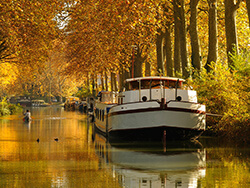
Barge river cruises in France
River cruises in France are the next luxury holiday destination. Cruise your private barge with cook down the French rivers.
Read more..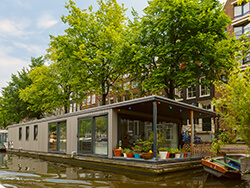
Rent a houseboat in Amsterdam
A houseboat is a great place to stay when visiting Amsterdam. Stay close to the city center but have a lot of private space.
Read more..